FlowStock is a single self-hosted binary for multi-branch stock control: products, stock, orders, purchasing and accounts. Each branch runs its own copy, works fully offline, and syncs peer-to-peer with the others. No cloud, no accounts, no central server.
Try it in seconds: docker run -p 8787:8787 ghcr.io/vul-os/flowstock
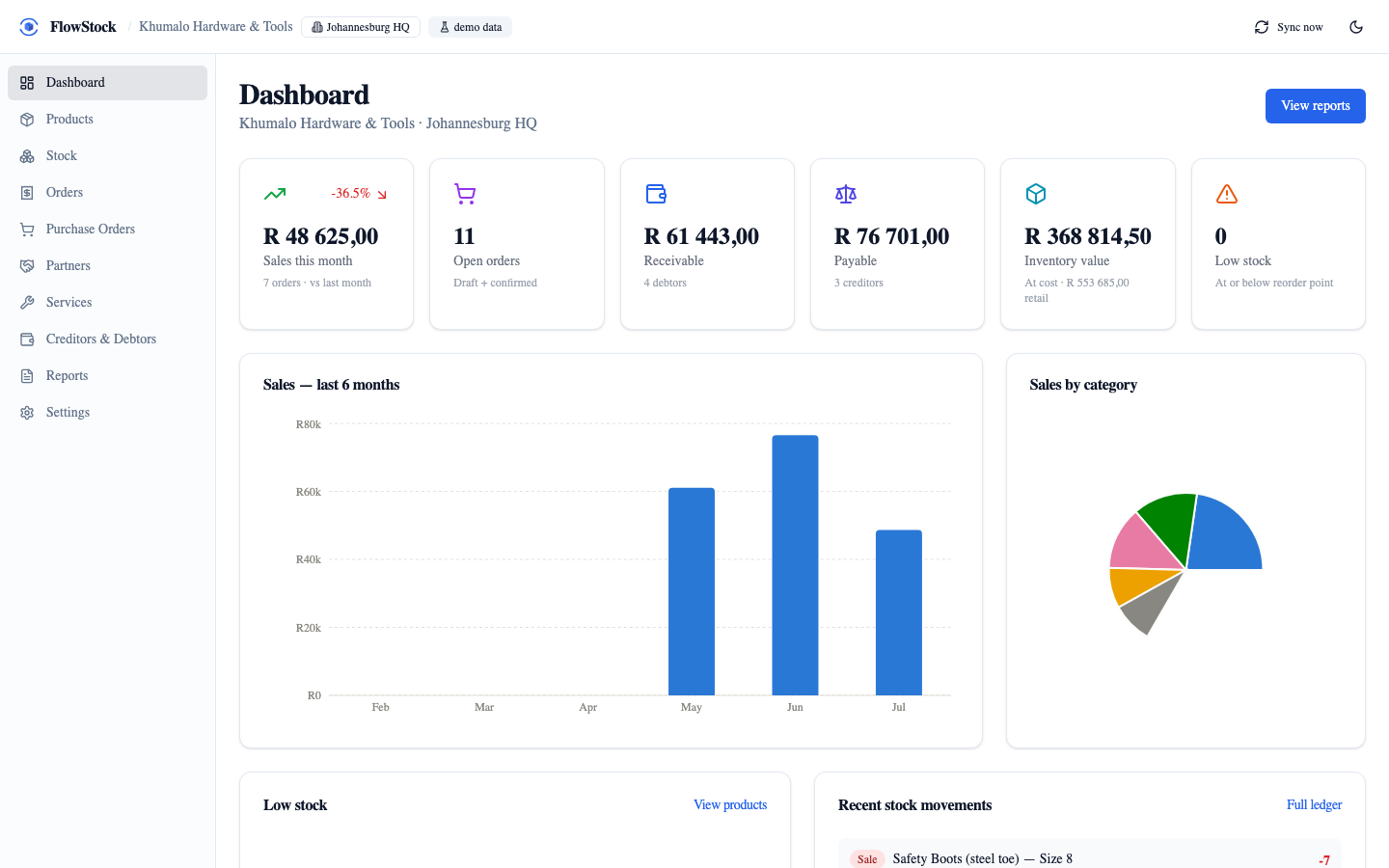
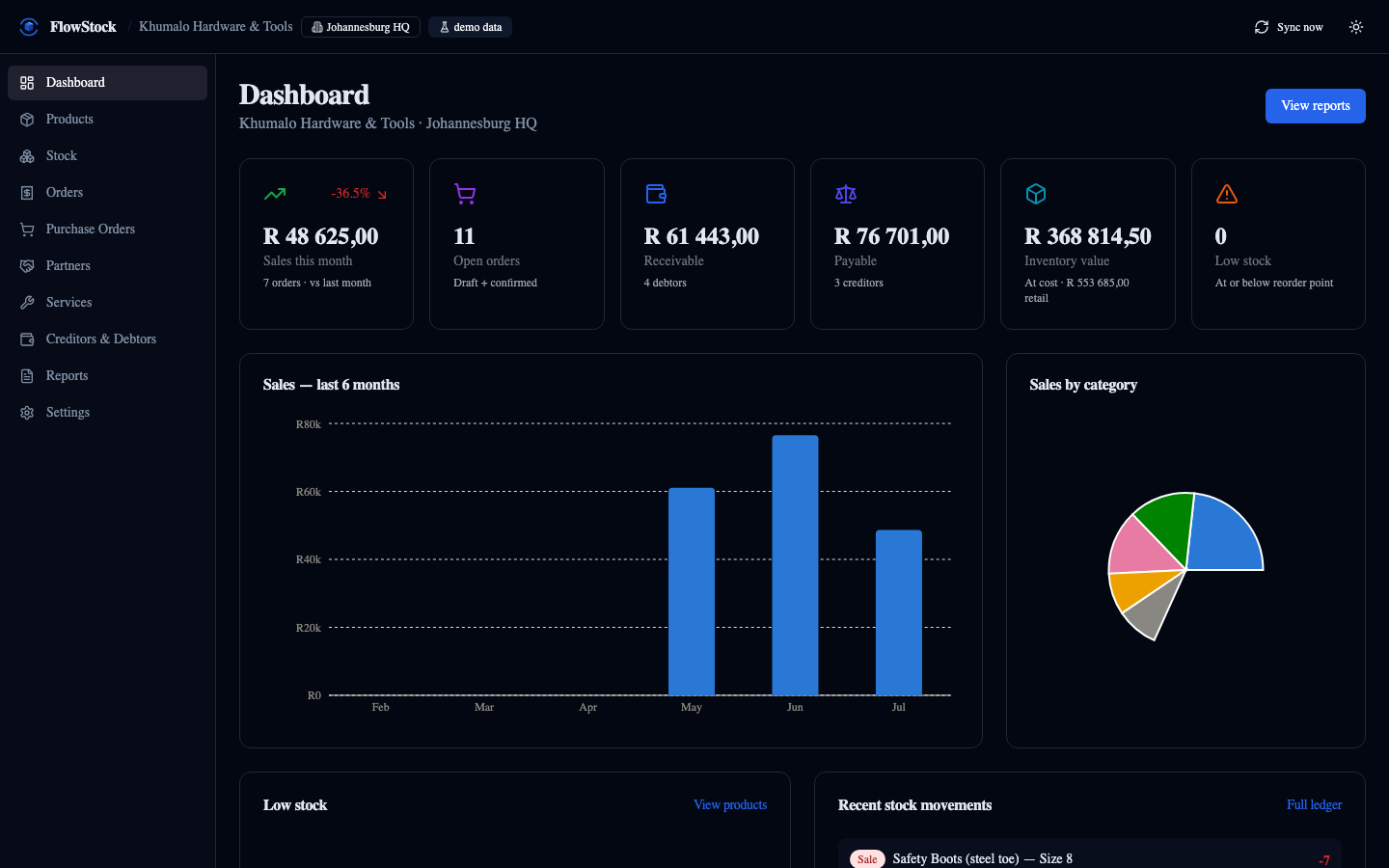
Real stock control backed by an append-only ledger — not a spreadsheet, not a mutable counter that drifts.
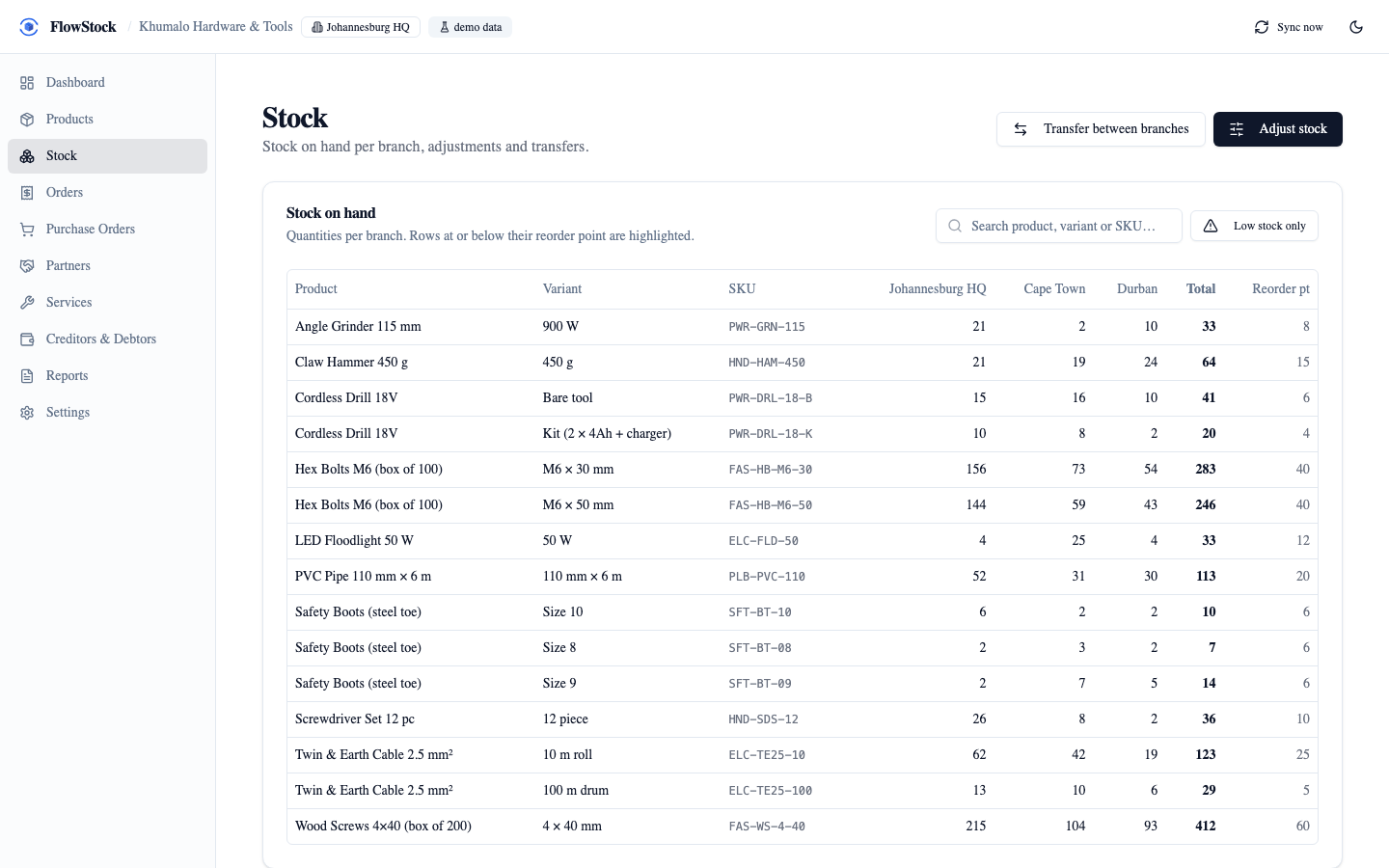
Categories, SKUs, price and cost price, attributes and reorder points — with per-branch stock on hand.
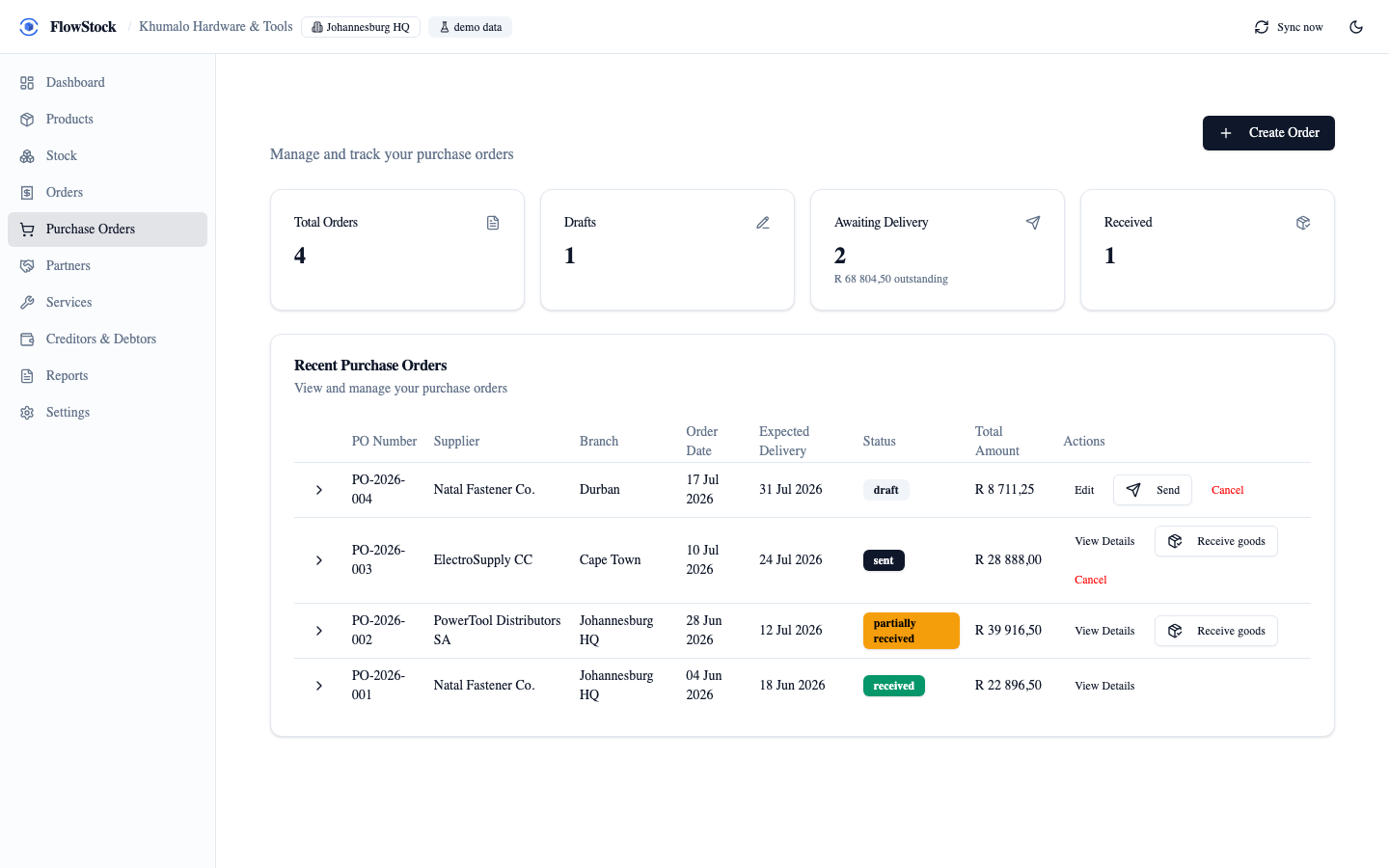
Sales orders that deduct stock on confirmation; purchase orders with VAT and goods receiving, including partial receipts.
Stock counts, write-offs and between-branch transfers — every change is an audited movement in the ledger.
Balances computed from orders, purchase orders and recorded payments. Know who owes what at a glance.
Sales, inventory valuation, movements, low stock and accounts — all computed live, all exportable to CSV.
One ~15 MB binary with a local SQLite database. No cloud dependency, no subscription, no account required.
Stock is an append-only ledger, so two branches that both traded while disconnected always converge to the same totals. No central server decides the truth — the branches do, together.
Run FlowStock on a laptop, a shop PC, a server, a NAS or a Raspberry Pi. Each keeps a full local database.
Point one branch at another over the LAN, a VPN, or a Vulos Relay tunnel. A new device adopts the existing workspace and pulls its history.
An offline branch never stops working. When it can reach a peer again, changes replay both ways — and merge without conflict.
Catalog edits resolve last-writer-wins; stock movements merge by union. Any topology works: a pair, a hub, or a full mesh.
Generated straight from the app's demo data.
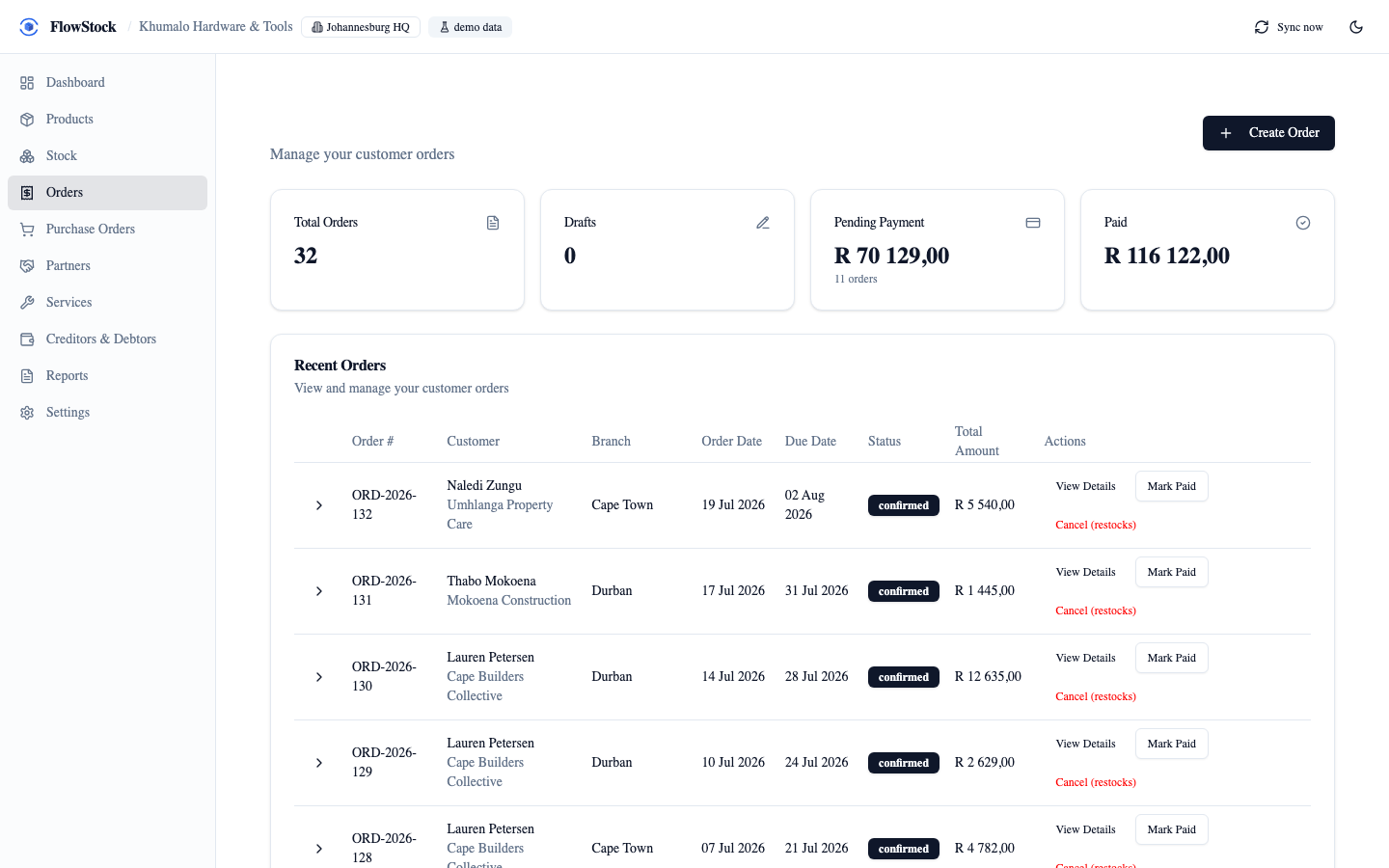
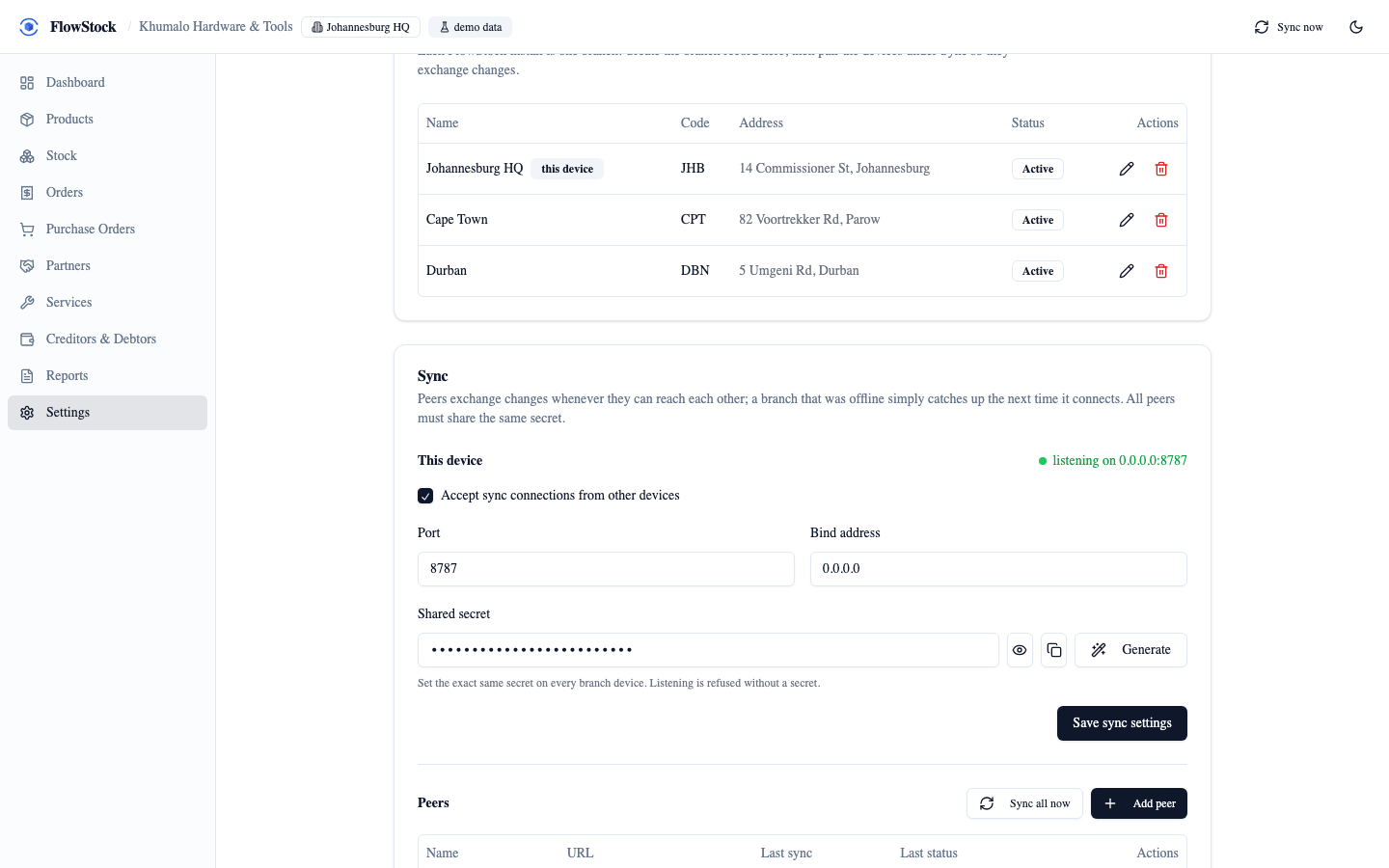
One binary, no dependencies. Docker, a release download, or from source.
# Docker
docker run -p 8787:8787 -v flowstock-data:/data \
  -e FLOWSTOCK_HOST=0.0.0.0 -e FLOWSTOCK_DATA_DIR=/data \
  ghcr.io/vul-os/flowstock:latest

# or a release binary
./flowstock            # then open http://localhost:8787

# or from source (Go 1.25+, Node 18+)
git clone https://github.com/vul-os/flowstock.git
cd flowstock && npm install && npm run build:all
./flowstock
Free and open source. Runs standalone, or as an app inside the Vulos OS.
 FlowStock